Niolam Ja Se Kochaneczke
‘Niolam Ja Se Kochaneczke’ explores potentialities of queer utopias, while looking at the relationship between history, ‘national values’ and power structures.
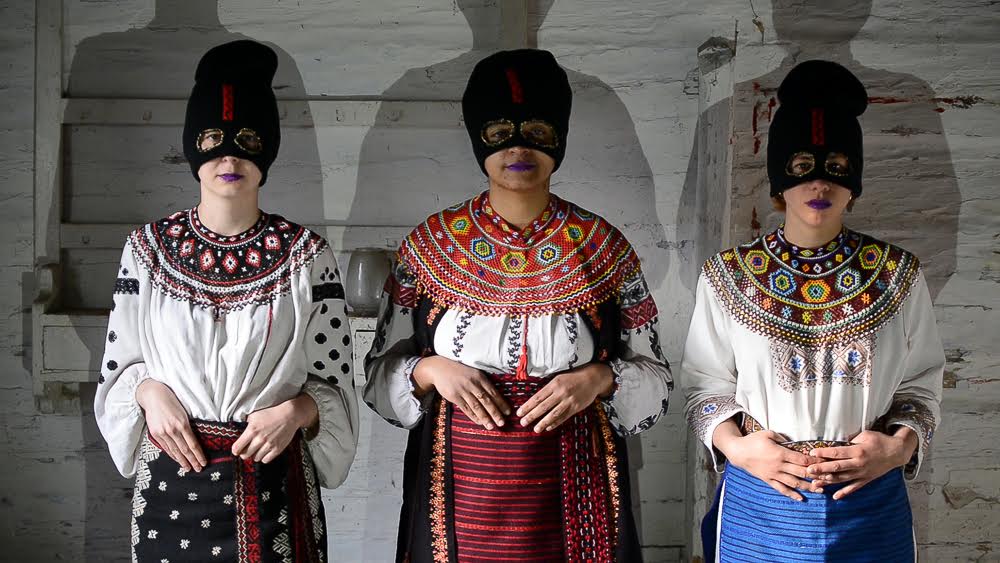
Through this Eastern European folk traditions are revisited and whilst employing feminist and queer reading it is questioned why queer love has never been preserved and celebrated in the folk history. Katarzyna Perlak reclaims these stories by subverting the narrative of ‘straight’ love songs to represent queer love stories instead.
History is problematized and the way tradition is represented, often only to sustain the power structures that claim it is ‘objective’. Through her work the viewer is encouraged to consider and experience history as a discourse made out of multiple, overlapping and contesting narratives rather than a single, fixed entity.
Queerness In Eastern Europe is often perceived as a contemporary phenomenon that arrived from Western Europe, rather than something that always had its presence. I want to acknowledge its historical place and reclaim histories that were never told. As well as this I want to speak of queerness in context of rural communities, as too often it is considered only within the urban setting.
The recordings were done in a traditional rural setting in East of Poland (Roztocze and Karpaty) with folk singers singing both in Polish and Lemkov (Ukrainian dialect).